The 2nd International Workshop on Language Models and Programming Languages
Generative artificial intelligence, exemplified by large language models (LLMs), is reshaping various aspects of programming languages, significantly simplifying many stages of software development. In recent years, many traditional areas of the programming languages (PL) community, such as program analysis and verification, program synthesis, and compiler optimization, have been profoundly influenced by LLMs, creating new opportunities for advancement. Despite their rapid progress, the inherent limitations of LLMs, particularly context length constraints, hallucinations, and high inference costs, restrict their effective application to PL tasks and other real-world problems.
As two distinct computational paradigms, neural networks represented by LLMs and traditional computation models based on programming languages have unique strengths and characteristics. To encourage researchers from the PL and ML communities to collaboratively address these challenges, we will host the International Workshop on Language Models and Programming Languages (LMPL) at SPLASH 2026, alongside other co-hosted PL conferences and workshops. We envision this new workshop as a platform for researchers from diverse backgrounds to engage in insightful exchanges, fostering synergy between traditional PL techniques and cutting-edge generative AI research, and driving innovation in these fields.
The workshop aims to achieve the following goals:
-
Facilitate discussions among researchers on the primary challenges of LLM-driven solutions for PL problems and other LLM-driven applications.
-
Provide a platform for researchers to exchange novel ideas and preliminary findings at the intersection of programming language techniques and language models.
-
Establish a forum for academia and industry professionals to bridge the gap between academic research and industry requirements, encouraging the practical application of programming language methodologies and language models to tackle real-world challenges.
Series:
- LMPL 2026: https://conf.researchr.org/home/splash-issta-2026/lmpl-2026
- LMPL 2025: https://conf.researchr.org/home/icfp-splash-2025/lmpl-2025
Keynote Speaker
Baishakhi Ray
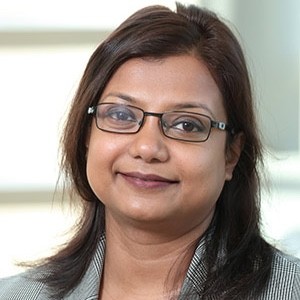
Title: Programming with Trust: Toward Reliable and Private Agentic AI for Code
Abstract: AI is rapidly reshaping software development through increasingly capable code generation and agentic workflows. However, as these systems move from assisting developers to acting autonomously, the central challenge shifts from scale to trust. In this talk, I argue that trustworthy AI for code requires rethinking the entire software engineering pipeline—integrating generation with reasoning, execution, and validation—while preserving the privacy of proprietary code and data. I will discuss emerging approaches for context-aware, privacy-preserving AI systems that operate directly over enterprise codebases without exposing sensitive information, alongside techniques for ensuring correctness, security, and reliability. The goal is to move toward AI systems that are not only powerful, but also auditable, privacy-aware, and safe to deploy in real-world environments.
Bio: Baishakhi Ray is an Associate Professor of Computer Science at Columbia University, where she directs the ARiSE Lab, conducting research at the intersection of AI and Software Engineering. Her work focuses on developing AI and program analysis techniques to improve software reliability, security, and developer productivity, including automated testing, debugging, and code generation. She received her Ph.D. from the University of Texas at Austin and has earned several honors, including the NSF CAREER Award, the IEEE TCSE Rising Star Award, and multiple ACM Distinguished Paper Awards.
Fri 9 OctDisplayed time zone: Pacific Time (US & Canada) change
08:30 - 10:00 | |||
09:00 60mKeynote | [Keynote] Programming with Trust: Toward Reliable and Private Agentic AI for Code LMPL Baishakhi Ray Columbia University | ||
10:30 - 12:00 | |||
10:30 20mFull-paper | Symbolon: Symbolic Execution by Learning Code Transformation LMPL Jie Zhu University of Chicago, Penghui Li Columbia University, Zhongxuan Li University of Chicago, Chihao Shen University of Maryland, Ziyang Li Johns Hopkins University, Yizheng Chen University of Maryland, Kexin Pei The University of Chicago | ||
10:50 15mShort-paper | Feature Reduction for Translating Language Interpreters from C to Safe Rust LMPL Bo Wang National University of Singapore, Brandon Paulsen Amazon, Joey Dodds Amazon, Daniel Kroening Amazon, Umang Mathur National University of Singapore, Prateek Saxena National University of Singapore Pre-print | ||
11:05 20mFull-paper | SWE-Proof: Can Language Models Resolve Real-World Issues with Machine-Checked Proofs? LMPL George Ma University of California, Berkeley, Benjamin Mikek Georgia Institute of Technology, Haoyu Li University of Illinois Urbana-Champaign, Ferhat Erata Amazon Web Services, USA, Yuhao Zhang Amazon Web Services, Zeren Shui Amazon Web Services, Murali Krishna Ramanathan AWS AI Labs, Hao Zhou Amazon Web Services, Behrooz Omidvar Tehrani AWS AI Labs, Jun Huan AWS AI Labs, Anoop Deoras AWS AI Labs, Somayeh Sojoudi University of California, Berkeley | ||
11:25 15mShort-paper | The Checkability Boundary: Abstraction Principles for LLM-Assisted Verification and Analysis LMPL Chenyu Zhou University of Southern California, Yuzhou Fang University of Southern California, Jingbo Wang Purdue University | ||
11:40 20mFull-paper | Detecting Database Migration Non-equivalence through LLM-Assisted Mutation-Score-Guided Testing LMPL Yuhao Zhang Amazon Web Services, Sayan Ghosh Amazon Web Services, Amit Kachroo Amazon, Jun Huan AWS AI Labs | ||
Accepted Papers
Call for Papers
We invite submissions discussing recent advancements at the intersection of language models and programming languages. This workshop will offer researchers the opportunity to exchange ideas and explore emerging research directions. Specifically, LMPL focuses on programming language-related problems, including program analysis, verification, and optimization. It also explores how PL techniques, such as formal methods and PL design principles, contribute to language model applications. More specifically, the scope of LMPL includes, but is not limited to:
LLMs for PL tasks
- LLMs for static analysis, such as program verification, bug detection, and program optimization
- LLMs for code generation, such as program transpilation, synthesis, and repair
- LLMs for program testing, such as fuzzing and domain-specific system testing
- Other tasks in the fields of programming languages and software engineering
PL techniques for LLM applications
- PL techniques for harness engineering
- PL techniques for agent design
- PL techniques for model training
- PL techniques for hallucination mitigation
- Other aspects where PL techniques can contribute to LLM applications
Benchmarks and Empirical Studies
- New benchmarks for specific PL tasks and empirical studies of existing LLM-driven PL techniques
- Empirical studies of existing benchmarks, such as the works summarizing or criticizing existing benchmarks
- Empirical studies of explainable AI in PL tasks, such as proposing and investigating a specific hypothesis
We welcome the following two formats of submissions:
-
Research paper: Similar to research papers presented at various conferences, these should include a well-designed methodology and experimental measurements
-
Extended abstract: Presenting forward-looking viewpoints or showcasing ideas that have not been thoroughly evaluated through experiments
Evaluation Criteria
Reviewers will evaluate each contribution for its soundness, significance, novelty, verifiability, and clarity. Submissions should clearly state how they are novel and how they improve upon existing work. We will employ a double-blind review process. Thus, no submission may reveal its authors’ identities. The authors must make every effort to honor the double-blind review process. In particular, the authors’ names must be omitted from the submission and references to their prior work should be in the third person.
Submission Instructions
We will use HotCRP as the online submission system. Papers must be prepared in LaTeX, adhering to the ACM format available at http://sigplan.org/Resources/Author/#acmart-format using the sigplan option. Specifically, each kind of submission should conform to the following requirements:
- Research paper: 8–10 pages (not including references). Authors can choose to include or not include accepted submissions in the proceedings. Accepted submissions will be invited to give a talk.
- Extended abstract: 1-4 pages (not including references). These submissions will not be included in the proceedings, but accepted submissions will be invited to give a talk.
Submissions can be made via the submission site by the submission deadline. We encourage the authors to upload their paper info early (and can submit the PDF later) to properly enter conflicts for double-blind reviewing. If a submission is accepted, at least one author of the paper is required to attend the workshop and present the paper.
The official publication date of the workshop proceedings is the date the proceedings are made available by ACM. This date may be up to two weeks prior to the first day of SPLASH 2026. The official publication date affects the deadline for any patent filings related to published work.
| Fri 9 Oct 2026 Workshop Day |
| Fri 28 Aug 2026 Camera Ready |
| Sat 15 Aug 2026 Author Notification |
| Fri 10 Jul 2026 Paper Submission |
Shraddha BarkeCommittee Member
Microsoft Research, Redmond
United States
Aaron BembenekCommittee Member
University of Melbourne
Australia
Yuandao CaiCommittee Member
Hong Kong University of Science and Technology
China
Mingshuai ChenCommittee Member
Zhejiang University
China
Simin ChenCommittee Member
Department of Computer Science, George Mason University
United States
Loris D'AntoniCommittee Member
University of California at San Diego
United States
Benjamin DelawareCommittee Member
Purdue University
United States
Yangruibo DingCommittee Member
University of California, Los Angeles (UCLA)
United States
Yang FengCommittee Member
Nanjing University
China
Thomas GilrayCommittee Member
Washington State University
United States
Arjun GuhaCommittee Member
Northeastern University, USA
United States
Tzu-Han HsuCommittee Member
Harvard University, USA
United States
Heqing HuangCommittee Member
City University of Hong Kong
China
Penghui LiCommittee Member
Columbia University
Shaohua LiCommittee Member
The Chinese University of Hong Kong
Hong Kong SAR China
Yiling LouCommittee Member
University of Illinois at Urbana-Champaign
United States
Sergey MechtaevCommittee Member
Peking University
China
Kristopher MicinskiCommittee Member
Syracuse University
United States
Cyrus OmarCommittee Member
University of Michigan
United States
Kexin PeiCommittee Member
The University of Chicago
United States
Xujie SiCommittee Member
University of Toronto
Ting SuCommittee Member
East China Normal University
China
Yongqiang TianCommittee Member
Monash University
Hong Kong SAR China
Chengpeng WangCommittee Member
National University of Singapore
Singapore
Di WangCommittee Member
Peking University
China
Ningning XieCommittee Member
University of Toronto
Canada
Xiaoyuan XieCommittee Member
Wuhan University
China
Peisen YaoCommittee Member
Zhejiang University
China
He YeCommittee Member
University College London
United Kingdom
Stefan ZetzscheCommittee Member
Amazon Web Services
United Kingdom