Speaker: Prof. Gail C. Murphy
The University of British Columbia
Title: Essential Complexity in Software Engineering, Revisited

In 2026, four astronauts traveled further from Earth than any human in 50 years. Software was central to what made their successful mission possible. And yet the challenge of building software remains exactly what Fred Brooks named 40 years ago: some complexity is essential, born of the problem itself, and some is accidental, born of our own choices. As our ambitions grow, that distinction has never mattered more. This talk explores what essential means in the age of AI. Brooks gave us the question. The answer may have changed.
Bio: Gail C. Murphy is a Professor of Computer Science at The University of British Columbia. Gail's research focuses on improving the productivity of software developers and knowledge workers by providing the necessary tools to identify, manage and coordinate the information that matters most for their work. Gail is a Fellow of the ACM, a Fellow of the Royal Society of Canada and a co-founder of Tasktop Technologies Inc, an enterprise software company that was acquired by Planview Inc. in 2022.
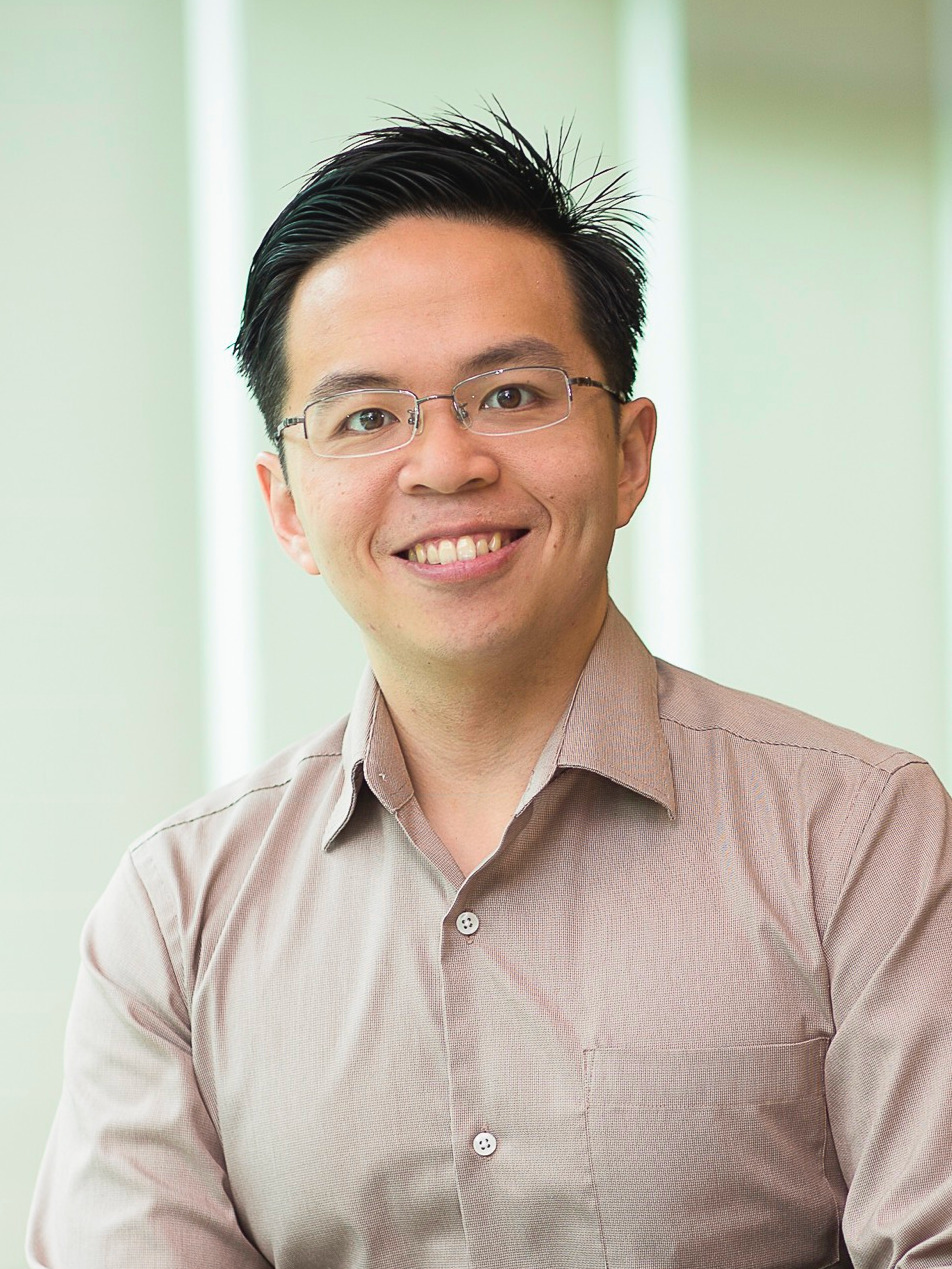
Speaker: Professor David Lo
Singapore Management University
Title: Realism, Rigor, and Relevance: Charting Evaluation for Code LLMs and Agents
Abstract: As code LLMs and agents become increasingly integrated into software engineering practice, the necessity for effective evaluation frameworks to guide their development has never been more critical. The software engineering and EASE communities can play a leading role in this transition by improving evaluations across three key dimensions: Realism, Rigor, and Relevance. Realism involves evolving beyond simple benchmarks toward more complex scenarios that better reflect the constraints and complexities found in professional development practice. Rigor demands a shift toward more holistic, multi-dimensional assessments that consider not only functional correctness but also essential non-functional properties. Finally, Relevance focuses on grounding these assessments in "in-the-wild" case studies to understand how these tools perform in practice. While the former dimensions allow for high-frequency testing, the latter requires more targeted experiments due to the associated costs, yet they fundamentally complement each other. This talk will highlight the progress made so far in these dimensions and discuss promising future directions for achieving trustworthy code LLMs and agents.
Bio:
David Lo is the OUB Chair Professor of Computer Science and Director of the Center for Research in Intelligent Software Engineering (RISE) at Singapore Management University. Championing the area of AI for Software Engineering (AI4SE) since the mid-2000s, he has demonstrated how AI — encompassing data mining, machine learning, information retrieval, natural language processing, and search-based algorithms — can transform software engineering data into actionable insights and automation. Through empirical studies, he has also identified practitioners' pain points, characterized the limitations of AI4SE solutions, and explored practitioners' acceptance thresholds for AI-powered tools. His contributions have led to over 20 awards, including four Test-of-Time awards and seventeen ACM SIGSOFT/IEEE TCSE Distinguished Paper awards, and his work has garnered over 48,000 citations. An ACM Fellow, IEEE Fellow, ASE Fellow, and National Research Foundation Investigator (Senior Fellow), Lo has also served as a PC Co-Chair for ASE'20, FSE'24, and ICSE'25.