Tuesday 7 July FSE Opening Keynote: Benoit Baudry
Université de Montréal
Title: Punking Up Dependency Hell
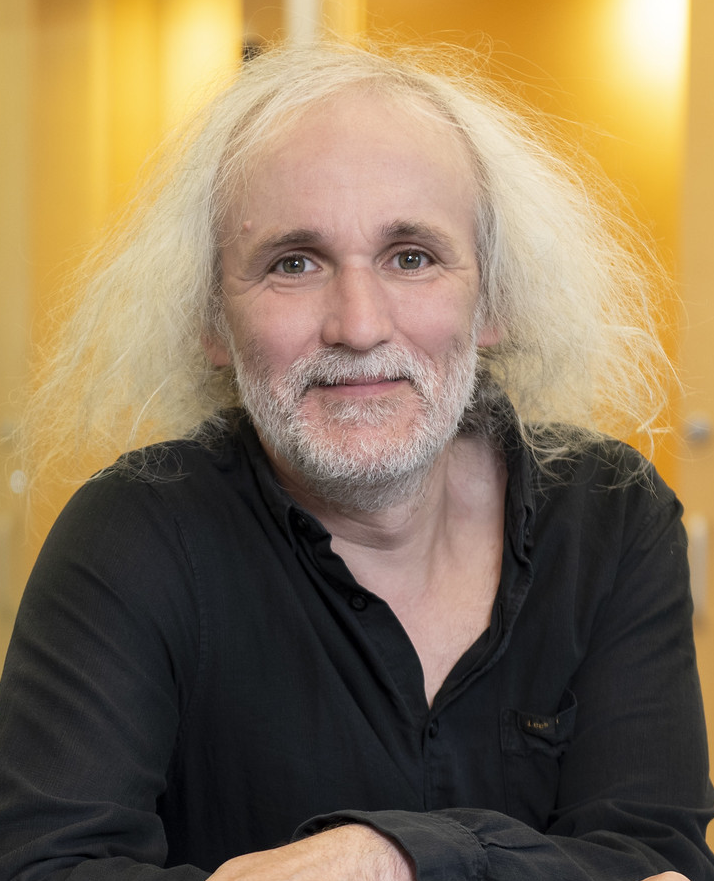
Software does not exist in the void. A software application in any sector, of any size and complexity, relies on third-party dependencies. They provide reusable features, as well as test, build and deployment facilities. Born from the best software engineering practices of modularization and reuse, software dependencies also offer a fertile ground for abuses, from heartbleed to shai hulud, activism through protestware, or unnecessary code bloat. Development teams who used to handle a dependency hell, now need to manage the risks of a broader, richer network of dependencies, known as the software supply chain. In this talk, we discuss the latest research that keeps the software supply chain flame alive.
Bio: Benoit Baudry is a Professor in Software Engineering at the Université de Montréal and holds the Canada Research Chair in Reliable Software Supply Chain. Prior to joining Université de Montréal, he was a research scientist at INRIA (France) from 2004 to 2017, and a Professor at the KTH Royal Institute of Technology (Sweden) from 2017 to 2023. His work focuses on automated program analysis for observability, testing and randomization. He performs experimental research, for which he favors exploring code execution over code on disk.
Tuesday 7 July FSE Keynote: Dickson Tsai
Anthropic
Title: Harness Design for Increasingly Capable Models: How Newer Claude Code Features Shape Agent Trajectories
 A coding agent’s harness, the software that mediates the agent’s interaction with the world, determines how much of a model’s capability translates into delivered engineering work. As models have grown more capable, Claude Code’s harness has evolved alongside them. This talk is a retrospective on Claude Code’s public releases since the start of the year, detailing the design considerations behind each and the aggregate patterns they reveal. We frame each agent session as a trajectory: a search through the user’s environment that accumulates knowledge and enacts changes within it. Through that lens, the year’s launches sort into two moves: letting trajectories run further per unit of human attention (auto mode, routines, remote control, worktrees), and managing what each trajectory is conditioned on (memory, multi-agent code review). Meanwhile, increased model capability strengthens the trajectories themselves. We conclude by examining how to orient these trajectories toward desired outcomes. Once step-by-step correctness is no longer the constraint, the binding problems become reconciliation—merging many independently correct trajectories into one repository—and validation—making it cheap for humans to review and revise intent for agents that are competent but not clairvoyant. Both can be software engineering problems, and we offer them to this audience as open questions.
Bio: Dickson Tsai is a Member of Technical Staff at Anthropic, where he has worked on Claude Code since shortly after its launch. He pioneered hooks and built the foundations for skills support—Claude Code’s core extensibility primitives. Before Claude Code, he worked on pre-training data research at Anthropic and spent six years as a growth engineer on Google Search. He is currently interested in the right extension points for developer teams to run richer coding agent trajectories.
Wednesday 8 July FSE Keynote: Sheila McIlraith
University of Toronto
Title: Towards Building Safer AI Systems

Advances in AI will transform many aspects of our lives and society, presenting immense opportunities but also posing significant risks and challenges. For many, large language models, chatbots, and agentic systems will serve as the main points of interaction with AI in the short-term, their benefits and risks increasingly well publicized. For computer scientists—practitioners, researchers, and educators—advances in AI are transforming the way we develop and deploy software, accelerating research, and prompting a rethinking of how we effectively educate students. The tension between measured, safe adoption of AI and expeditiously seizing its potential economic and societal benefits is palpable, with many western nations reporting low levels of trust among their citizens, and governments struggling to identify appropriate governance and regulatory structures. In this talk I’ll discuss some of the challenges to building and deploying “safe” AI systems, and potential pathways to safer adoption. To this end, I’ll provide a brief technical deep dive into several areas where our decades of experience in formal methods and the development of safety-critical systems are inspiring methods to address the unique challenges of building safer AI systems—from synthesis, to verification, testing, auditing, and monitoring.
Bio: Sheila McIlraith is a Professor in the Department of Computer Science at the University of Toronto, a Canada CIFAR AI Chair (Vector Institute), and an Associate Director and Research Lead at the Schwartz Reisman Institute for Technology and Society. McIlraith is the author of over 150 scholarly publications in the areas of knowledge representation, automated reasoning, and machine learning. Her work focuses on AI sequential decision making, broadly construed, through the lens of human-compatible AI. McIlraith is a fellow of the Association for Computing Machinery (ACM), a fellow of the Association for the Advancement of Artificial Intelligence (AAAI), and a Schmidt Sciences AI2050 Senior Fellow. She is a member of the Canadian AI Safety Institute (CAISI) Research Council and Chair of the One Hundred Year Study of AI (AI100). McIlraith and co-authors have been recognized with a number of honours for their scholarly contributions including the 2011 SWSA Ten-Year Award, the ICAPS 2022 Influential Paper Award, and the 2023 IJCAI-JAIR Best Paper Prize.
Thursday 9 July FSE Keynote: Mary Shaw
Carnegie Mellon University
Title: Correctness, confidence, and context: Framing software assurance in the AI age

Software engineering has a complicated relationship with “correctness”. We recognize the challenges of full formal rigor as well as many required properties beyond functional correctness. Although we satisfice in practice, we are still stuck in the mindset that we could reason our way to correctness, if only we had enough information.
Generative AI has introduced a new dimension to assurances: its foundation is statistical rather than formal. Traditional software engineering establishes confidence through rigorous reasoning, domain knowledge and expert judgment. In contrast, generative AI’s results are sophisticated predictions, in Valiant’s words “probably approximately correct”. This inherently limits assurances about the results are to probabilistic assertions. Further, the nuances and implicit associations that guide human judgment are not accessible to its training sets, so that tacit knowledge cannot be incorporated in its models.
We have many approaches for developing assurances that a software system does what it’s expected to do, though most of them focus on the specification of the code rather than the requirements for the system, let alone fitness for purpose. We have failed to develop a systematic understanding of the relative merits of the various approaches. I hope that generative AI will finally force us to tackle this.
To that end, I will challenge us to think systematically about our assurance techniques. We need ways to make informed, reasoned choices about cost-effective combinations of approaches to developing confidence in our systems.
We call ourselves software engineers. Let’s act like engineers
Bio: Mary Shaw is the Alan J. Perlis University Professor of Computer Science in the Software and Societal Systems Department at Carnegie Mellon University. She has made fundamental contributions to an engineering discipline for software through developing data abstraction with verification (with W. Wulf and R. London), establishing software architecture as a major branch of software engineering (with D. Garlan), designing innovative curricula supported by two influential textbooks, and helping to found the Software Engineering Institute at Carnegie Mellon. She now works in software design. She has received the United States’ National Medal of Technology and Innovation, the ACM SIGSOFT Outstanding Research Award (with David Garlan) and the IEEE Computer Society TCSE’s Lifetime Achievement, Distinguished Educator, and Distinguished Women in Software Engineering Awards. She is an elected Fellow and Life Member of the ACM, the IEEE, and the American Association for the Advancement of Science.