Getting around in Bavaria (and FAQ)
A quick reference guide for international visitors attending ESEIW 2026 in Munich.
Getting Around
How do I get from the airport to the city centre? Munich Airport (MUC) is well connected. The S-Bahn lines S1 and S8 run every 20 minutes and reach Marienplatz in about 40 minutes (€13.60 single, or covered by a day pass). Taxis take 35–50 minutes and cost around €70–90. Uber and Bolt operate in Munich as well, same as various car sharing options.
What public transport options are there? Munich has an excellent integrated network of U-Bahn (metro), S-Bahn (suburban rail), trams, and buses — all run by the so-called MVV. A single ticket covers all modes. Day passes (Tageskarte) are good value if you plan multiple trips. Validate your ticket before boarding or you risk a €60 fine.
Can I rent a bike or scooter? Yes. MVG Rad (the city’s bike-share scheme) has stations across Munich. Several e-scooter operators (Tier, Lime, Voi) also operate here. Cycling is also common and generally safe; stick, however, to the dedicated bike lanes and do not ride on pavements. Either way, please take care and be safe.
Money & Payments
What currency is used? The Euro (€). ATMs are widely available. Most restaurants, shops, and hotels accept Visa and Mastercard; American Express is less universally accepted. Consider using multi-currency online banking to avoid transaction fees when coming from overseas. Note that some traditional beer halls, markets, and small shops are cash only, so it’s worth keeping some euros on hand.
What is the tipping culture? Tipping is appreciated but not obligatory. The standard practice is to round up the bill or add roughly 10% for good service. Rather than leaving cash on the table, it is customary to tell the server the total you want to pay when they bring the bill — for example, if the bill is €18.50, you might say twenty (“zwanzig”) and they may keep the change. For taxis, rounding up has become the norm. Note, however, that you are never obligated to tip if you feel uncomfortable with it, let alone when you deemed the service to have been poor. Finally, automatic service charges are also not a thing in Munich.
When dining in groups, it is also very common to either split the bill in equal shares or pay on an individual basis. For larger groups who prefer paying on an individual basis, we recommend letting the waiter know in advance out of courtesy so that they can prepare mentally to do the math.
Safety
Is Munich safe? Absolutely, Munich is a very diverse and very safe city. It consistently ranks among the safest major cities in Europe. Violent crime is de-facto non-existent. Normal precautions apply as in any other metropolitan area: watch for pickpockets in crowded areas like Marienplatz, the Hauptbahnhof (main station), and busy tourist sites — particularly in the weeks following Oktoberfest when the city sees high visitor volumes. Keep an eye on your belongings at outdoor terraces and beer gardens.
What is the emergency number?
- Police: 110
- Emergencies (firefighters, ambulances): 112
In case of an emergency and in case of doubt, call the 110 (no prefix). English-speaking operators are available on those lines.
Health & Practicalities
Is tap water safe to drink? Yes. Munich’s tap water is not only very safe, but it is of excellent quality. It comes from the Alps and is regularly tested. And it also tastes very good. You can drink it straight from the tap without any concern whatsoever. In restaurants, asking for tap water (“Leitungswasser”) is perfectly acceptable, though some establishments may charge a small fee for the glass.
Are there pharmacies nearby? Pharmacies (Apotheke — look out for the red “A” sign) are common throughout the city. Staff usually speak English. For after-hours needs, a rotation system ensures at least one pharmacy in each district is open overnight; the address is posted on every pharmacy door.
What voltage and plug type is used? Germany uses 230V / 50Hz with Type F (Schuko) two-pin sockets. Visitors from the US, UK, or Australia will need an adapter.
Language & Culture
Do people speak English? In central Munich, especially in hotels, restaurants, and tourist areas, English is widely spoken. Conference staff will of course communicate in English. Learning a few basic German phrases — “Bitte” (please), “Danke” (thank you), “Entschuldigung” (excuse me) as well as “Servus” (good day but also good bye in Bavarian) — is well appreciated and goes a long way.
Are there any cultural customs to be aware of? A few things to keep in mind when visiting Munich:
- Sundays are quiet — most shops are closed. Supermarkets at the Hauptbahnhof and airport are exceptions.
- Jaywalking is frowned upon and can result in a small fine. Wait for the green pedestrian light even when the road looks clear.
- Bavarians are generally warm and hospitable, though conversations may sometimes start slightly more formally than you’re used to. Contrary to popular belief, however, you will not be fined if you accidentally smile or make a joke.
What language are menus in? Most restaurants in tourist areas offer menus in English. Outside the centre, German-only menus are common and a translation app on your phone will serve you well (google translate works very well).
Food & Drink
What are some local dishes to try? Bavarian cuisine is very hearty (some might also say it is unhealthy, but they all lie). Classics include Weisswurst (white veal sausage, traditionally eaten before noon with sweet mustard - do not eat the skin), Schweinshaxe (roasted pork knuckle), Leberkäse (literally translated to liver cheese, containing neither liver nor cheese but just difficult to explain baked variations of meat eaten often as a sandwich), Obatzda (a spiced cheese spread), and Brezn (pretzels). For dessert, try Kaiserschmarrn or Apfelstrudel. None of these two originate in Munich but ours remains still the best. Going back to “hearty” cuisine: Looking at the short list, it may be actually considered a bit unhealthy, but what is a conference week without trying out new things?
What about vegetarian or vegan options? Availability has improved significantly. Most modern restaurants offer vegetarian dishes; vegan options are increasingly common in the city centre. Traditional Bavarian restaurants have fewer options, but even there dishes like Käsespätzle (cheese noodles) and vegetable-based soups, just to name a few, are usually available.
More generally speaking: Should you have any dietary restrictions, whatever their nature, please do not be shy in explaining them at the restaurants as these are taken very seriously and we are convinced that the waiters are happy to guide you through the options.
Is the beer culture a big deal? Yes. Munich is home to some of the world’s most famous breweries (Hofbräu, Augustiner, Paulaner, among others) and it is home to the oldes Breweries in the world. Bavaria is also home to the purity law for beers, dating back to the year 1516. Beer gardens are a local institution; feel free to bring your own food to many of them, though buying drinks from the garden is expected. Non-alcoholic options and good coffee are always available. If you would like to know more about the historic background of why you are allowed (and welcome!) to bring your own food, ask the general co-chairs. They are always happy to give uninvited lectures.
Weather
What should I pack for late September / early October? Autumn in Munich and its surrounding Alps can be unpredictable but also very beautiful. Expect daytime temperatures around 12–18°C (54–64°F), cooler evenings, and occasional rain. A light jacket or layer, and a compact umbrella or waterproof shell, are recommended. Comfortable walking shoes are a must.
Useful Apps & Resources
- MVGo app — public transport journey planner and ticket purchase
- DB Navigator — for wider train travel across Germany and Europe
- Google Maps / Apple Maps — both work well in Munich
- Google Translate — camera mode is useful for menus and signs
- Augustiner Finder - app to help you find Augustiner Beer from Munich over Hawaii to Turin
Exploring the Surroundings
The Garching Campus is located about 30 minutes by subway (U-Bahn, line U6) from Munich city center. The city is world-renowned for being an internationally thriving research and innovation hub blending Bavarian traditions throughout its various historical sites.
Explore the TUM Campus
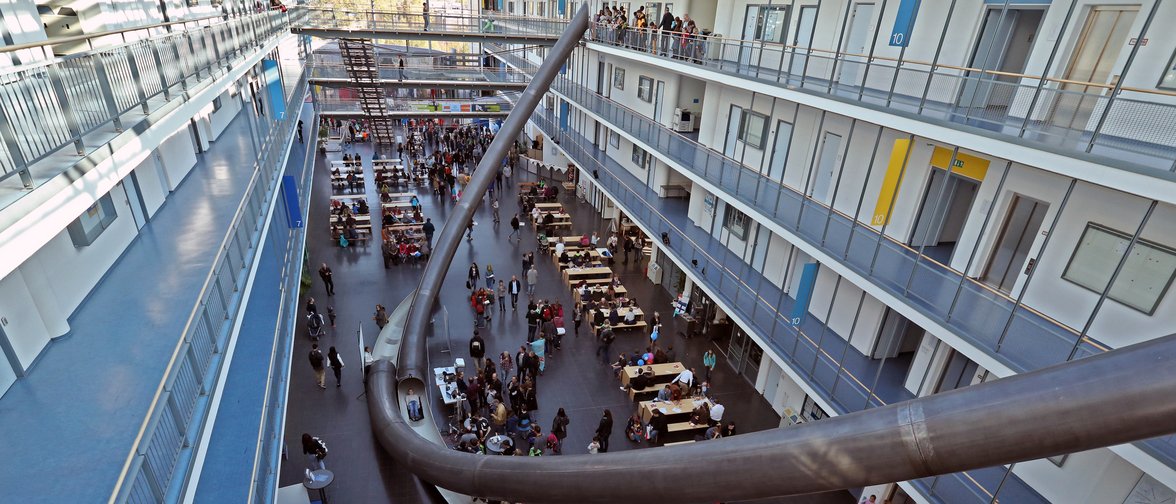
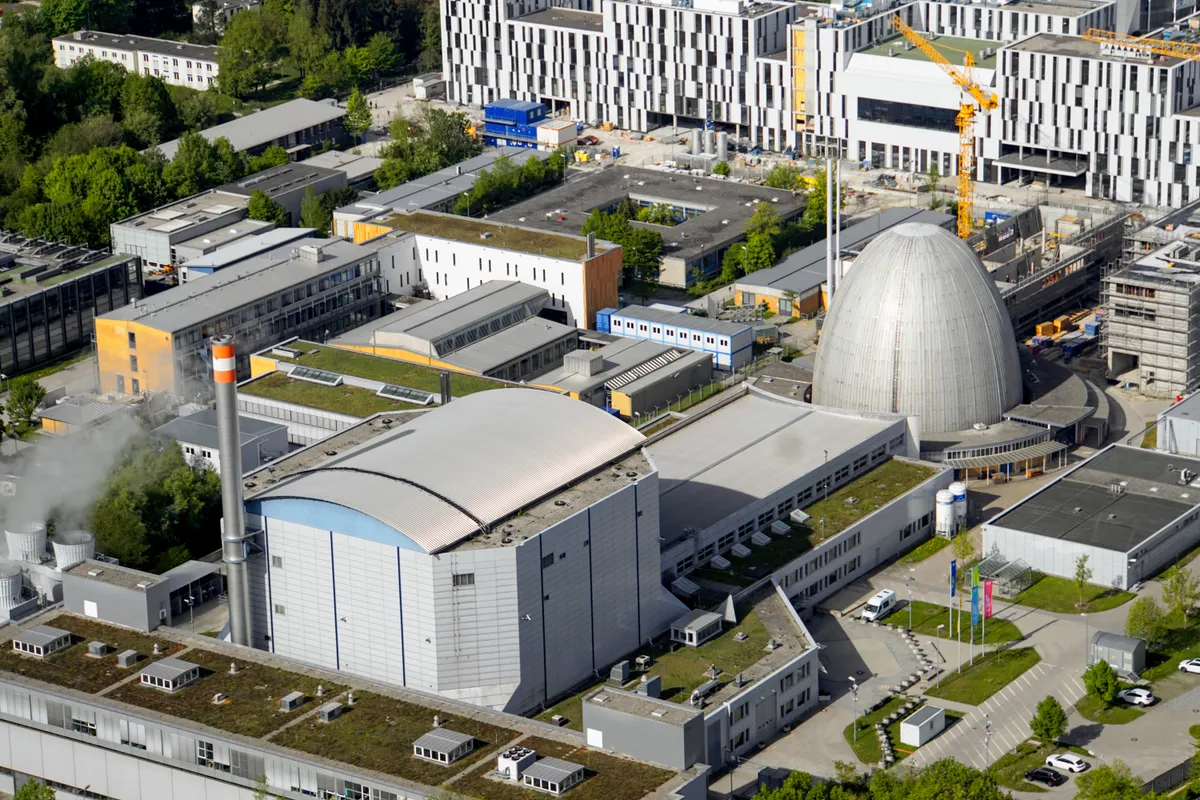
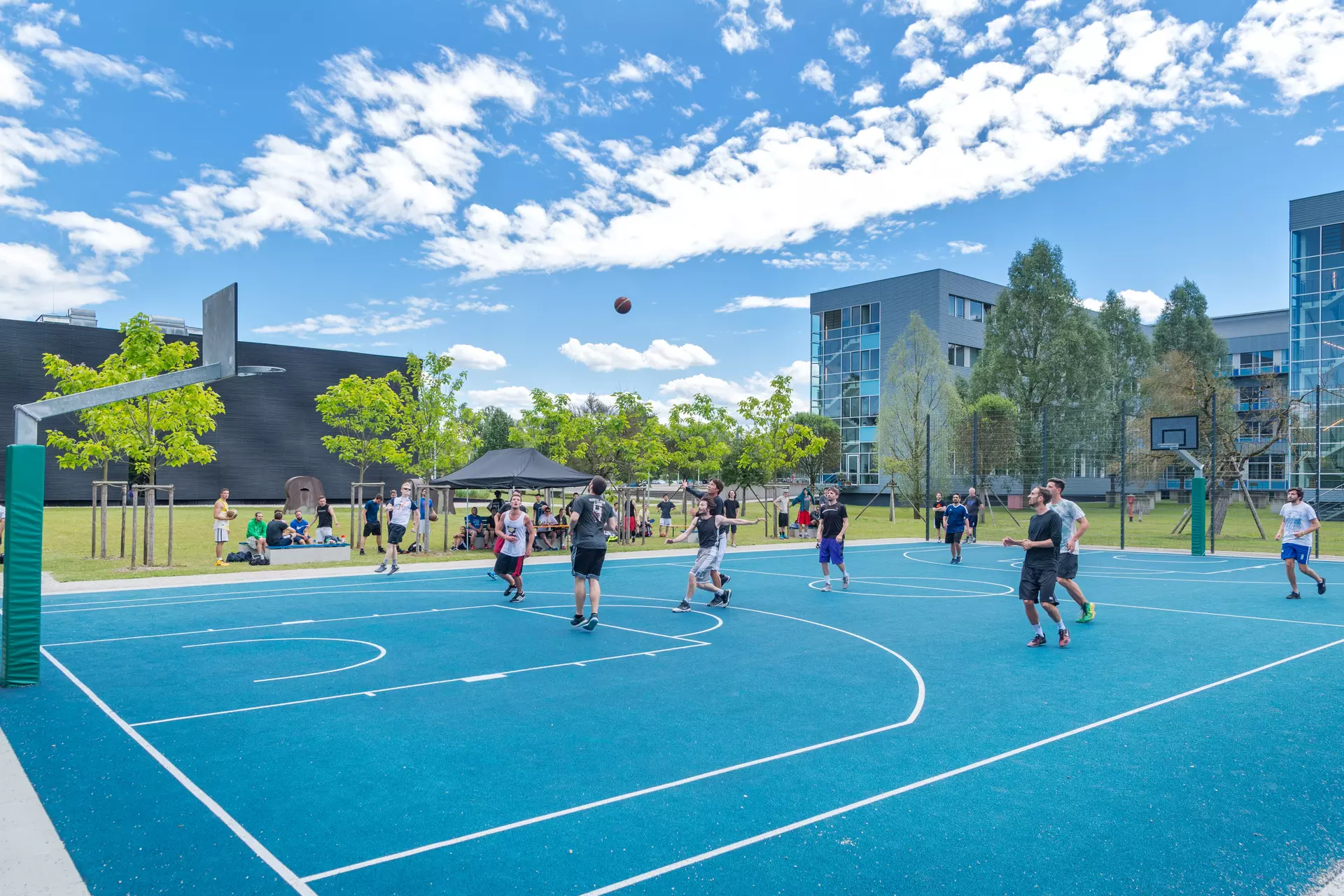
In front of the conference venue, participants can explore campus attractions like the iconic Parabola Slide in the Mathematics/Informatics building, visit the historic “Atomic Egg” research reactor (rather from the outside, do not try to enter please), or one of the many campus facilities. The campus offers plenty of ways to relax, from parks and cafés to outdoor sports courts and gyms.
Explore Munich
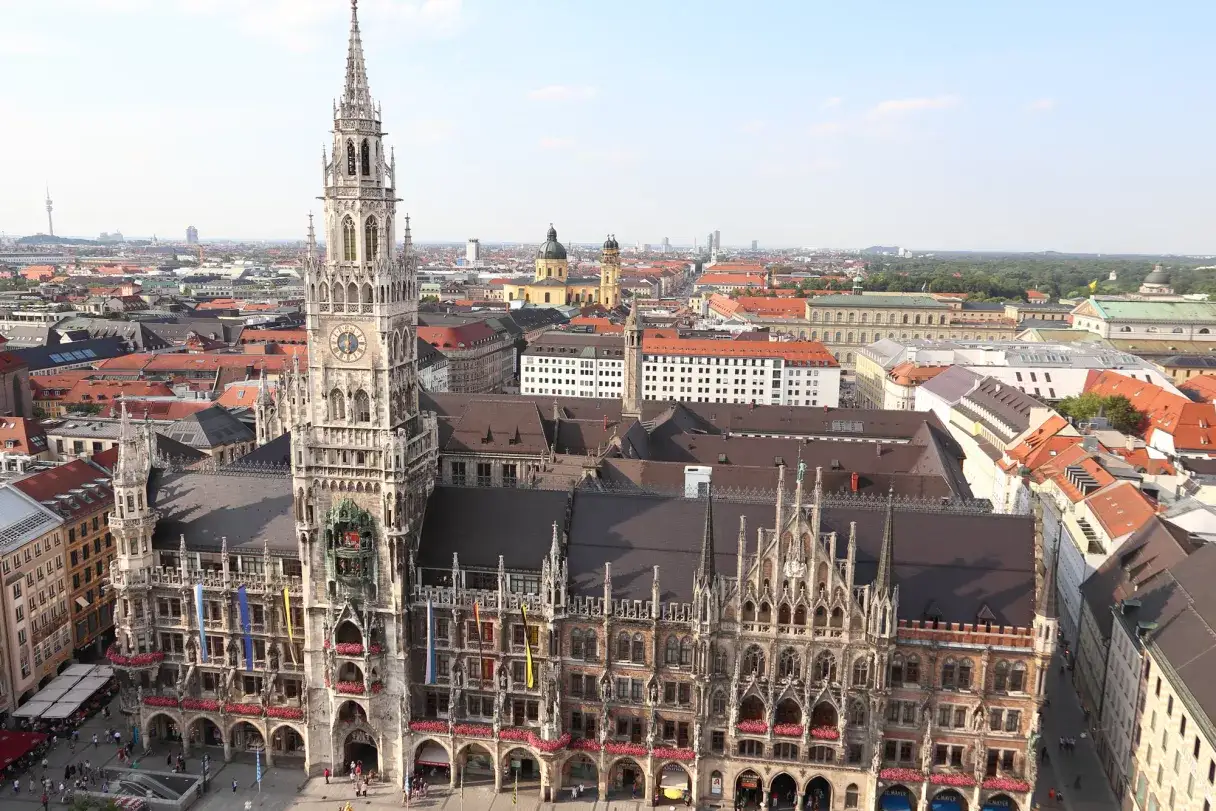
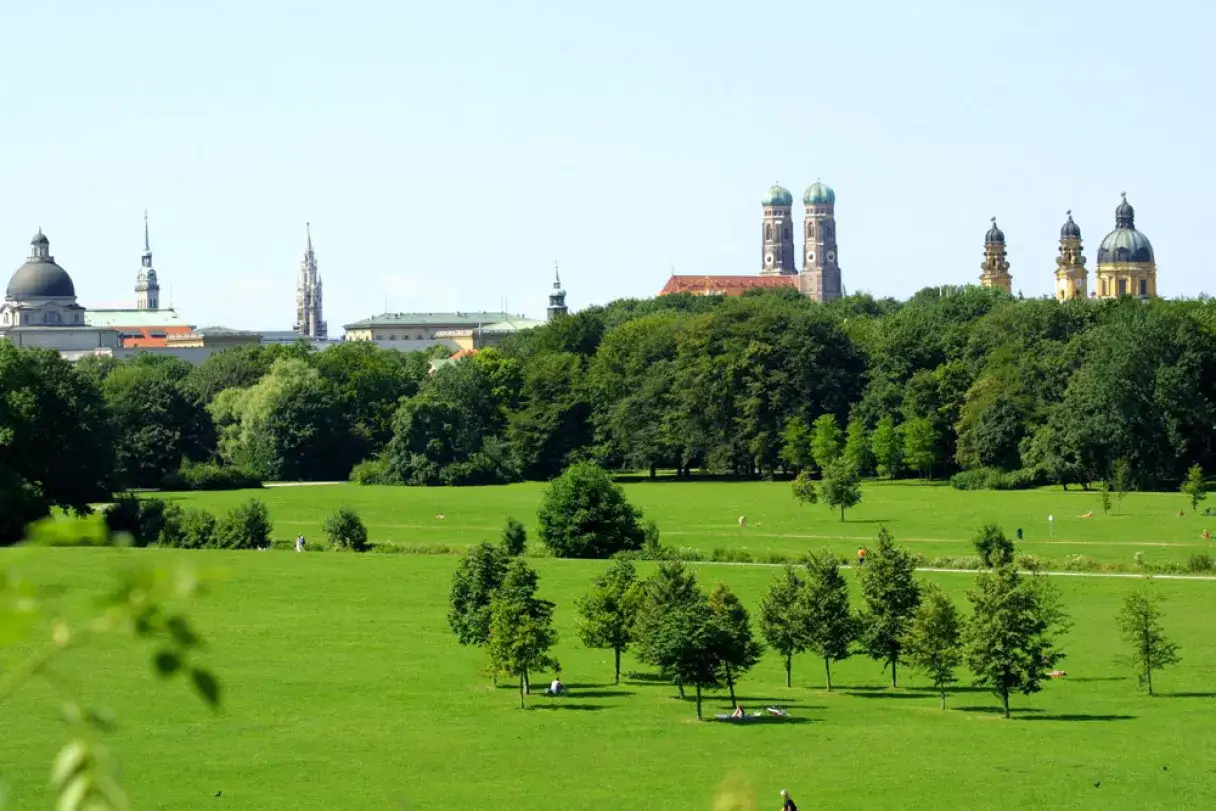
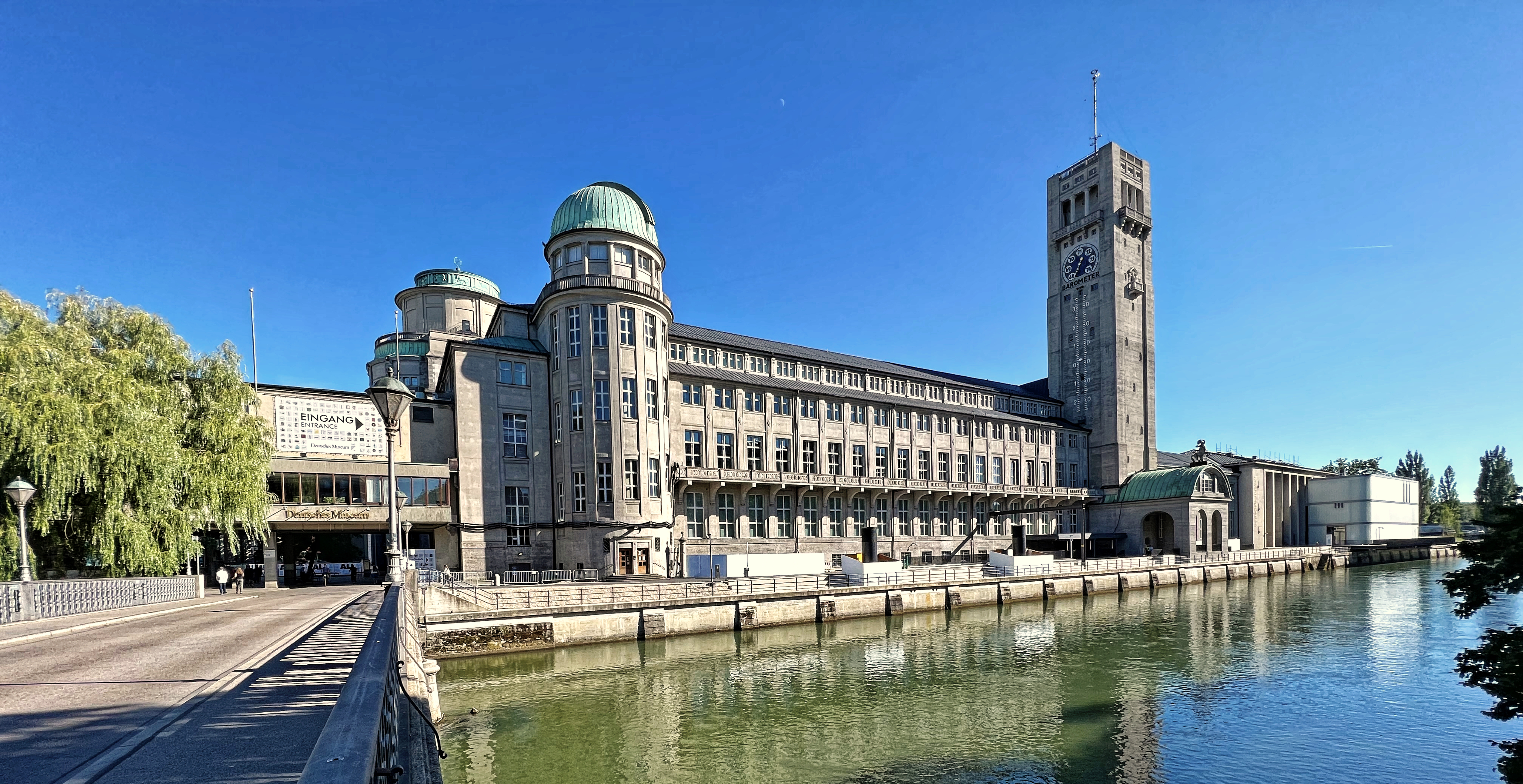
A vibrant mix of culture, history, research, and leisure.
Explore Bavaria
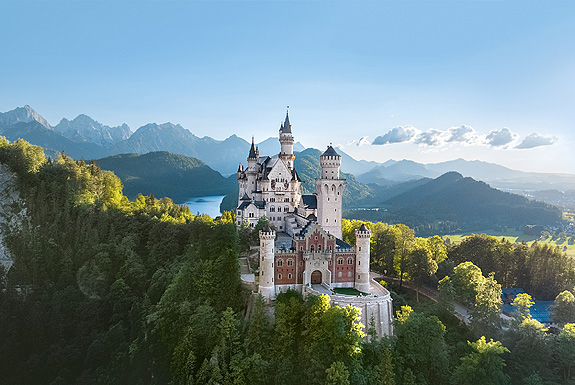
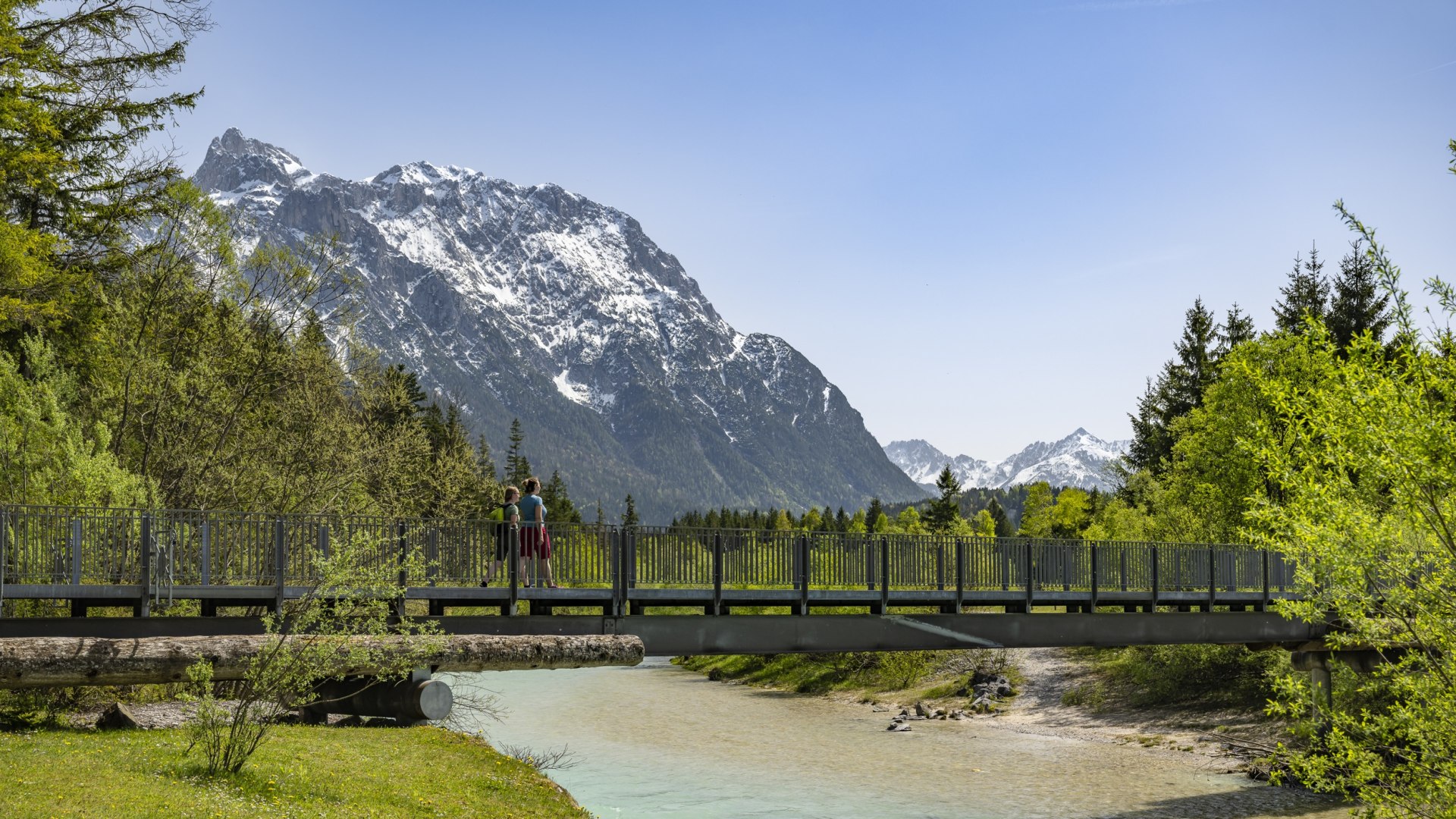
Picturesque landscapes and cultural landmarks within reach.