Tue 13 October ASE Keynote: Prof. Michael Pradel
Trust the Delta: Rethinking Software Validation in the AI Era
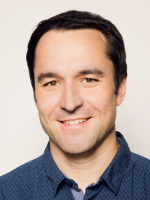
Generative AI is making software changes increasingly cheap to produce, shifting the bottleneck from implementation to validation. This keynote argues that software changes offer a uniquely tractable setting for establishing correctness. Unlike an arbitrary program, a change comes with an existing implementation whose behavior is largely accepted and, often, a natural-language description of what is intended to change. Together, these provide a powerful partial specification in which existing behavior should be preserved by default, except where the stated intent justifies a difference. This reframes the oracle problem from determining absolute correctness to validating a behavioral delta by asking which behaviors changed, which remained stable, and whether the observed differences match the intended change. By combining natural-language intent with execution across program versions, AI-based techniques can construct increasingly strong evidence about the correctness of a change. As coding agents become more capable, the central challenge for AI4SE therefore shifts from generating patches to justifying them. Future systems should produce not only code changes, but executable evidence that the intended change, and only the intended change, actually occurred.
Biography
Michael Pradel is a faculty member at the CISPA Helmholtz Center for Information Security and a full professor at the University of Stuttgart, which he joined after a PhD at ETH Zurich, a post-doc at UC Berkeley, an assistant professorship at TU Darmstadt. He has visited Facebook, UC Berkeley, and UCLA for sabbaticals. His research interests span software engineering, programming languages, security, and machine learning, with a focus on tools and techniques for building reliable, efficient, and secure software. Michael has been recognized through the Ernst-Denert Software Engineering Award, an Emmy Noether grant by the German Research Foundation (DFG), two ERC grants, best/distinguished paper awards at FSE (3x), ISSTA, ASE (2x), ASPLOS, and MSR, and by being named an ACM Distinguished Member.
Wed 14 October ASE Keynote: Prof. Dr. Ir. Joost Noppen
Beyond the Hype: What AI Really Did to Software Engineering
Artificial intelligence is likely the largest disruptor to the discipline of software engineering since third and fourth generation languages arrived and we have all heard the stories of its impact. Productivity increases of more than 100x, faster delivery and reduced workforces, but also drops in quality, shifts in cognitive load and unpredictable costs and benefits. While the impact of AI has been profound, these stories rarely translate one-to-one into the daily practice experienced across industry. The devil, as always, is in the details, and in many cases there is much more at play than a new AI tool assisting with a well-understood engineering activity; it sits within a much wider software development lifecycle.
In this talk we will examine what professional life has been like for developers and organisations and how development has changed since the large-scale introduction of generative AI towards the end of 2022. We will examine scenarios ranging from initial adoption of coding assistants, to understanding their impact and getting company-wide buy-in, to supporting company-wide workflows using AI. As we go along, we will discuss what worked well, where we face fundamental challenges and where deeper research is needed to allow AI to reach its maximum potential for the software engineering discipline.
As a final outcome we will identify opportunities and needs, as well as foundational questions that academia and industry will need to address moving forward. Some of these will be urgent, such as providing deeper understanding of the quality and cost trade-offs for AI-enabled software systems. Others will require longer-form research and insight, such as how our views of technical and cognitive debt will change, and what the security implications are when we deploy our software systems in a world where bad actors have access to highly capable generative AI. The software engineering world is changing under our feet, so let us explore how to move with the times.
Biography
Joost is an award-winning researcher, engineer and teacher in software engineering, leading a team of researchers focussed on the future of software engineering in the telecommunications industry as Chief Researcher Software at British Telecommunications. Joost has authored and co-authored over 100 papers, book chapters and books across academic and industrial venues and filed over 50 patents as a result of research he has led. His work has covered a wide variety of topics, including quality optimisation of software architectures, uncertainty management, bug prediction, model-driven engineering for ML lifecycle management, sustainability for software product lines and computational and artificial intelligence applied to software engineering.
Joost holds an MSc and PhD in Computer Science from the Universiteit Twente (Netherlands) and a PGCE in Higher Education from the University of East Anglia (UK). He has been the recipient of an EU Marie Curie Fellowship and is a member of the Higher Education Academy. Joost holds a visiting position as Professor in the Department of Informatics at King’s College London (UK). In 2024 Joost was awarded an honorary doctorate in engineering by Queen’s University in Belfast (UK).
Thu 15 October ASE Keynote: Prof. Myra Cohen
Lost in Automated Specifications: A Time and Space Odyssey in System Testing
Software testing from the system perspective has been the cornerstone of testing for decades, ensuring software satisfies customer requirements, is efficient, and dependable. And our community has spent significant effort formalizing and leveraging models that support this goal. Strong models lead to better testing and have provided the foundations for automated program repair and self-adaptation. As we have traveled through time we have utilized different types of models for specifying program inputs, system configurability, and for coverage of sequences of actions; all driven by the assumption that we can build those models. However, as we move into the next generation of automated software engineering, some of our long-held assumptions are breaking. Specifications may no longer be available or are less complete, our systems are becoming more complex and harder to define, and we have an increasing number of competing objectives. This is making our software more difficult to formally specify, and hence to test. Yet, we also have new powerful tools at hand that can help mitigate these challenges. In this talk I will look back and forward across space and time with an eye towards a new future of automated system testing.
Biography
Myra Cohen is a Professor and the Lanh and Oanh Nguyen Chair in Software Engineering in the Department of Computer Science at Iowa State University. Her research focuses on software testing, repair, and self-adaptation of complex systems such those which are highly configurable, embedded, or cyber-physical, and more recently she has been focusing on improving scientific software and that of emerging domains such as molecular programming and quantum computing. She is an ACM distinguished scientist, an IEEE Senior Member, a Better Scientific Software Fellow and a Fellow of Automated Software Engineering. She received the IEEE Technical Council on Software Engineering 2025 Barbora Bühnová Leadership Award for Women in Science and Engineering. She serves on many software engineering conference program committees and was the general chair of ASE 2015, and the program co-chair of ICST 2019, ESEC/FSE 2020 and ISSTA 2025.
Tue 13 OctDisplayed time zone: Amsterdam, Berlin, Bern, Rome, Stockholm, Vienna change
09:00 - 10:00 | |||
09:00 60mKeynote | Trust the Delta: Rethinking Software Validation in the AI Era Keynotes Michael Pradel CISPA Helmholtz Center for Information Security | ||
Wed 14 OctDisplayed time zone: Amsterdam, Berlin, Bern, Rome, Stockholm, Vienna change
09:00 - 10:00 | |||
09:00 60mKeynote | Beyond the Hype: What AI Really Did to Software Engineering Keynotes Joost Noppen Applied Research, British Telecommunications plc. File Attached | ||
Thu 15 OctDisplayed time zone: Amsterdam, Berlin, Bern, Rome, Stockholm, Vienna change
09:00 - 10:00 | Keynote 3: MyraKeynotes at Plenary Room (Forum 1-3) Chair(s): Justyna Petke University College London | ||
09:00 60mKeynote | Lost in Automated Specifications: A Time and Space Odyssey in System Testing Keynotes Myra Cohen Iowa State University | ||
17:45 - 18:15 | |||