International Workshop on Agentic Engineering (AGENT 2026)AGENT 2026
Agentic engineering is an emerging discipline focused on the design, development, and operation of systems that exhibit goal-directed autonomy. Foundation models (FMs), such as large language models (LLMs), have been accelerating progress in this area across academia and industry.
Agentic systems often involve multiple interacting agents, humans, and tools, requiring rigorous system-level engineering to ensure critical qualities like robustness, safety, and observability. A key design challenge in agentic engineering is the growing capability of FMs/LLMs. Developers must decide whether to rely on the FM/LLM or external tools/systems for the same functionality. These decisions can be made at various stages depending on the problem and context: during design time, development time, or even at runtime from a software engineering perspective, and at pre-training time, post-training time, test/inference time, and post-inference time from an AI perspective. Highly autonomous agentic systems also require continuous monitoring, evaluation, observability, intervention, and oversight after deployment—an emerging discipline referred to as AgentOps.
While workshops on agentic or multi-agent systems have appeared at AI-focused venues, they typically emphasize theoretical modeling, multi-agent learning, or coordination protocols. In contrast, this workshop is situated within the software engineering community and addresses concrete engineering methods, design trade-offs, and operational practices needed to develop and maintain agentic systems built on foundation models.
We also recognize that agentic engineering builds on foundational work from the agent-oriented software engineering (AOSE) community. However, the emergence of foundation models introduces new challenges around autonomy, tool integration, prompt-driven behavior, and post-deployment adaptation. This workshop seeks to update and re-contextualize those principles to address the design and assurance of modern agentic systems, particularly those grounded in large-scale pretrained models.
This workshop will provide a forum for exploring engineering methods, techniques, and tools for agentic systems in general and agentic systems for software engineering in particular. It will bring together researchers and practitioners to share insights, innovations, and real-world experiences in the design, development, and operation of agentic systems.
Tue 14 AprDisplayed time zone: Brasilia, Distrito Federal, Brazil change
08:00 - 17:30 | Tuesday Quiet RoomSocial, Networking and Special Rooms at Capri V Quiet Room for you to relax or work in a peaceful environment during ICSE 2026. | ||
08:00 9h30mOther | Quiet Room Social, Networking and Special Rooms | ||
08:00 - 19:00 | Tuesday RegistrationSocial, Networking and Special Rooms at Main Entrance Registration for ICSE 2026. | ||
08:00 11hRegistration | ICSE 2026 Registration Social, Networking and Special Rooms | ||
09:00 - 12:30 | Tuesday Morning Child CareSocial, Networking and Special Rooms at Ibiza III Child Care services available during ICSE 2026 to support attendees with children. | ||
09:00 3h30mOther | Child Care Social, Networking and Special Rooms | ||
10:30 - 11:00 | Tuesday Morning BreakCatering at Catering and Exhibition Hall (Europa I to IV) This break will provide an opportunity for networking and relaxation between sessions. | ||
10:30 30mCoffee break | Break Catering | ||
12:30 - 14:00 | Tuesday LunchCatering at Catering and Exhibition Hall (Europa I to IV) Lunch time with a variety of meal options available for attendees, including vegetarian choices. This session will provide an opportunity for attendees to enjoy a meal while networking with colleagues and discussing the day’s events. | ||
12:30 90mLunch | Lunch Catering | ||
14:00 - 17:00 | Tuesday Afternoon Child CareSocial, Networking and Special Rooms at Ibiza III Child Care services available during ICSE 2026 to support attendees with children. | ||
14:00 3hOther | Child Care Social, Networking and Special Rooms | ||
15:30 - 16:00 | Tuesday Afternoon BreakCatering at Catering and Exhibition Hall (Europa I to IV) Afternoon Break with a variety of beverages and snacks available for attendees. This break will provide an opportunity for networking and relaxation between sessions. | ||
15:30 30mCoffee break | Break Catering | ||
16:00 - 17:30 | |||
16:00 30mKeynote | Keynote: Lessons from the Frontlines: Deploying AI Agents in the Real World AGENT | ||
16:30 6mTalk | Building LLM-Based Voice Agents for Requirements Elicitation: An Experience Report on Early Prototypes AGENT Oshani Weerakoon Department of Computing, University of Turku, Tuomas Mäkilä University of Turku, Erkki Kaila Department of Computing, University of Turku, Shola Oyedeji LUT University | ||
16:36 6mTalk | An Agentic System for LLM-Driven Public Transportation Analytics: A Practical Application and Case Study in Salvador-Brazil AGENT Lucas Teixeira Borges Federal University of Bahia, Fei T. Liu Artificial General Intelligence Pty Ltd., Tatiane Rios Federal University of Bahia, Marcos V. Ferreira Federal University of Bahia, Clovis Carmo Federal University of Bahia, Danilo B. Coimbra Federal University of Bahia, Jorge Nery Federal University of Bahia, Matheus Souza Integra - Association of Transport Companies of Salvador, Noe O. Garcia Arcadis, Albert Bifet University of Waikato, Institut Polytechnique de Paris, RICARDO RIOS Federal University of Bahia | ||
16:42 6mTalk | AI in Insurance: Adaptive Questionnaires for Improved Risk Profiling AGENT Diogo Silva Deloitte and Faculty of Engineering, University of Porto, João Teixeira Deloitte, Bruno Lima LIACC, Faculty of Engineering, University of Porto Pre-print | ||
16:48 6mTalk | Progressive Gated Co-Teaching for Weakly Supervised Deepfake Detection AGENT Rui Lang FEIT-UTS, Guangsheng Yu University of Technology Sydney, Qin Wang CSIRO Data61, Xu Wang Global Big Data Technologies Centre | ||
16:54 11mLive Q&A | Session 4 Joint Q&A AGENT | ||
17:05 20mLive Q&A | Panel Discussion AGENT | ||
17:25 5mDay closing | Closing AGENT | ||
18:00 - 22:00 | ICSE Steering Committee MeetingMeetings and BOF Events at Capri IV Dinner will be included for members. | ||
18:00 4hMeeting | ICSE Steering Committee Meeting Meetings and BOF Events | ||
19:00 - 21:00 | ICSE ReceptionSocial, Networking and Special Rooms at Catering and Exhibition Hall (Europa I to IV) A reception for all attendees to network and socialize. Join us for an evening of fun and connection at ICSE 2026! | ||
19:00 2hMeeting | ICSE Reception Social, Networking and Special Rooms | ||
19:00 - 21:00 | ICSE Newcomer ReceptionSocial, Networking and Special Rooms at Europa II A special reception to welcome newcomers to ICSE 2026. Join us for an evening of networking and fun! | ||
19:00 2hMeeting | ICSE Newcomer Reception Social, Networking and Special Rooms | ||
Accepted Papers
Call for Papers
Topics of interest include, but are not limited to:
-
Requirements engineering for agentic systems
-
Architectural design for agentic systems
-
Verification, validation, and testing of agentic systems
-
AgentOps – DevOps for agentic systems
-
Development processes and lifecycle management for agentic systems
-
Evaluation methodologies, tools, and benchmarks for agentic systems
-
Responsible AI and AI safety of agentic systems
-
Agentic systems for software engineering, including requirements, design, coding, testing, deployment, and operations
-
Human-agent interaction, collaboration, and oversight
-
Risk and impact assessment (e.g. economic/social impact)
-
Real-world case studies and practical experiences in different domains
The workshop will be highly interactive, including invited keynotes or talks, and paper presentations for different topics in the area of agentic engineering.
Submission Guidelines
We invite the following types of submissions:
-
Full papers (research or experience): up to 8 pages
-
Short papers (research or experience): up to 4 pages
-
Extended abstracts: up to 5 pages. These are free of APC (article processing charge).
All submissions must be in English, in PDF format, and must not exceed the page limits (including references and appendices) listed above. The workshop follows a single-anonymous review process. Submissions should be made via HotCRP. Note this year the official “ACM Primary Article Template” should be used for submissions, which can be obtained from the ACM Proceedings Template page. LaTeX users should use the sigconf option and the review (to produce line numbers for easy reference by the reviewers) options. To that end, the following LaTeX code can be placed at the start of the LaTeX document: \documentclass[sigconf,review]{acmart}
Other detailed submission policies and formatting guidelines are aligned with the ICSE 2026 Research Track submission process.
The official publication date of the workshop proceedings is the date the proceedings are made available by ACM. This date may be up to two weeks prior to the first day of ICSE 2026. The official publication date affects the deadline for any patent filings related to published work.
Authors of selected accepted papers will be invited to submit extended versions of their work for consideration in the IEEE Software Special Issue on Engineering Agentic Systems.
Keynote Speakers
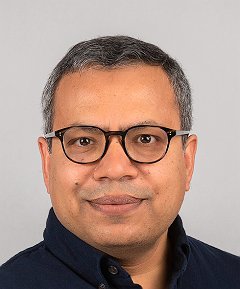
Coding agents have taken the world by storm. I will start this talk with a brief history of how we arrived here, beginning with the early days of using AI in software engineering. I will share experiences on working on AI for software engineering, and more specifically, on coding agents at two large companies. I will conclude by discussing how we can control agent behavior and what are some of the interesting problems in this space for software engineering researchers.
Satish Chandra is a research scientist at Meta, where he applies machine learning techniques to improve developer productivity. His work has spanned many areas of programming languages and software engineering, including program analysis, type systems, software synthesis, bug finding and repair, software testing and, of course, application of AI to software development. His research has been widely published in leading conferences in his field. Satish Chandra obtained a PhD from the University of Wisconsin-Madison, and a B.Tech from the Indian Institute of Technology-Kanpur, both in computer science. He is an ACM Fellow and an elected member of WG 2.4.
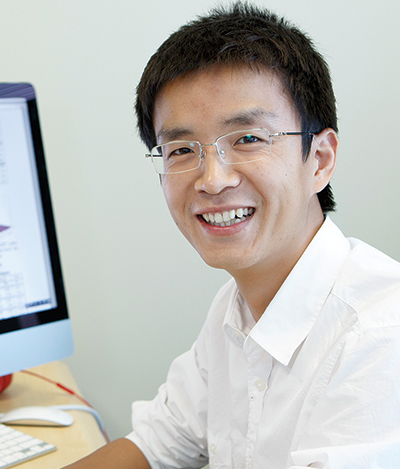
In recent years, Large Language Models (LLMs) have shown impressive performance across a wide range of downstream applications, including software engineering. This talk explores the evolution and recent trends of software engineering agents, featuring our recent work on Live-SWE-agent and Self-Play SWE-RL. We will discuss how these recent efforts enable live coding LLMs and software agents capable of autonomous and continuous self-improvement, paving the way toward next-level software intelligence.
Lingming Zhang is an associate professor at University of Illinois Urbana-Champaign. His research lies at the intersection of Software Engineering and Machine Learning. His group has pioneered a series of work on LLM-based software testing, repair, and synthesis (such as TitanFuzz, AlphaRepair, and Agentless), and also released multiple open code LLMs (including the recent SWE-RL, PurpCode, and Code World Model), with millions of downloads worldwide. Their techniques for training and improving code LLMs or agents have been adopted by leading AI companies, including Meta, Google, OpenAI, MiniMax, and DeepSeek.

What happens when AI agents leave the lab and land in the hands of real users? In this talk, I’ll share lessons from building and deploying agentic systems like GitHub Copilot and Excel’s M365 Copilot—where writing code is cheap, but testing and debugging are hard; prompts and tools age fast; and users don’t always know what to ask for. We’ll explore what’s working, what’s not, and why testing, trust, and thoughtful design matter more than ever. Along the way, I’ll offer a few critiques of our own assumptions—and a look at where we go from here.
Gustavo Soares is a Principal Research Manager at Microsoft, where he leads the Excel Agent Science team and drives research and product innovation at the intersection of agentic AI, large language models, and human–AI interaction. His work centers on the design, evaluation, and deployment of intelligent agents that can plan, reason, and act within complex productivity tools, with a strong emphasis on reliability, usability, and real‑world adoption at global scale. Previously, his research on agentic AI contributed to the development of GitHub Copilot agents for debugging and migration scenarios, and his work on modeless program synthesis helped lay the foundation for Visual Studio IntelliCode Suggestions, a capability used by millions of developers to automate repetitive and large‑scale code transformations. He received his Ph.D. in Computer Science from the Federal University of Campina Grande, Brazil; his doctoral thesis was recognized with the CAPES Thesis Award for the best Ph.D. thesis in Computer Science in Brazil, and he is also a recipient of the ACM John Vlissides Award.

AI-based and LLM-based systems are often cast as a threat to software engineering: coding agents grow more capable, junior roles shrink or disappear, and end-user programming appears ready to bypass experts altogether. This talk argues for a different conclusion. The deeper shift is not mainly about tools or tasks, but about organizational operating logic: how decisions are made, how knowledge moves, how work is coordinated, and how value is created. As these systems become more agentic, they will not merely support that shift; they will increasingly help analyze, adapt, and redesign it.
This change does not diminish the importance of software engineering. It broadens it. More of society will come to depend on semi-executable systems built from natural language, code, tools, policies, and workflows, while agentic environments increasingly generate, coordinate, and evolve many of those components. I take seriously concerns about reliability, maintainability, organizational inertia, and power. But these are better seen as constraints on the route than as arguments against the direction itself. Even imperfect AI can be transformative when deployed continuously at scale, and the central activities of software engineering are more likely to be redefined than replaced. For researchers, this creates a real risk that some AI4SE work targets practices already being folded into agentic workflows. For practitioners, it means that engineering discipline becomes more important, not less, as solution creation extends beyond traditional software developers.
Slides: Agentic Software Engineering Will Eat the World: AI-based Systems as the new OS of Society
Paper: The Semi-Executable Stack: Agentic Software Engineering and the Expanding Scope of SE
Robert Feldt is professor of software engineering at Chalmers University of Technology, Sweden, and at Blekinge Institute of Technology, Sweden. He has broad research interests spanning from human factors to hardcore automation and statistics, and including software testing and quality, requirements engineering, human-centred (behavioural) software engineering. He was an early contributor to search-based software engineering and have recently argued for increased application of psychology and social science to better understand and improve software engineering. Most of his research is empirical and conducted in close collaboration with industry partners in Sweden, Europe and Asia but he also leads more basic research. He received a PhD in computer engineering from the Chalmers University of Technology in 2002, studied psychology at Gothenburg University in the ’90s and has also worked as an IT and software consultant for more than 25 years. He is passionate about empirical research and methods and to change organisations through technological innovation.
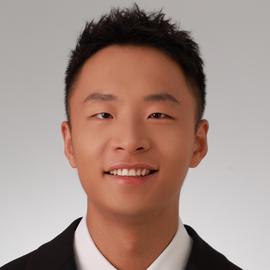
AI coding agents are rapidly evolving and capable of performing complex software engineering tasks. As these systems move toward real-world deployment, rigorous and meaningful evaluation becomes increasingly critical for understanding their capabilities, limitations, and risks. In this talk, I present a series of evaluation methods that aim to bridge this gap, covering code generation, question answering and agentic systems. I will discuss lessons learned from building realistic evaluation frameworks and outline future directions toward trustworthy and effective AI software engineering agents.
Dr. Chao Peng is a Principal Research Scientist at ByteDance, where he leads the Software Engineering Lab focusing on AI agents for software engineering. His research interests include software testing, program repair and optimisation, as well as their synergy with machine learning and compiler techniques. His work has been published in premier venues such as ICSE, FSE, ASE, ACL, and NeurIPS. He received the Distinguished Reviewer Award at FSE 2025.
| Tue 14 Apr 2026 Workshop Date |
| Mon 26 Jan 2026 Camera Ready |
| Mon 8 Dec 2025 Notification |
| Fri 7 Nov 2025 Submissions Due (Extednded) |
Qinghua LuCo-chair
Data61, CSIRO
Australia
Ahmed E. HassanCo-chair
Queen’s University
Canada
David LoCo-chair
Singapore Management University
Singapore
Liming ZhuCo-chair
CSIRO’s Data61
Australia
Boming XiaWeb & Publicity Chair
Responsible AI Research (RAIR) Centre, Adelaide University
Australia
Yue LiuProceedings Chair
Australian National University
Australia
Bram Adams
Queen's University
Canada
Shaukat Ali
Simula Research Laboratory and Oslo Metropolitan University
Norway
Angela An
Deakin University
Australia
Scott Barnett
Applied Artificial Intelligence Initiative, Deakin University
Australia
Tingting Bi
The University of Melbourne
Australia
Jan Bosch
Chalmers University of Technology, Sweden
Lionel Briand
University of Ottawa, Canada; Lero centre, University of Limerick, Ireland
Canada
Di Cao
Swinburne University of Technology
Jieshan Chen
CSIRO
Australia
Jifeng Chen
The University of New South Wales Canberra
Jane Cleland-Huang
University of Notre Dame
United States
Liming Dong
CSIRO's Data61
Australia
Rodrigo Falcão
Fraunhofer IESE
Keheliya Gallaba
Centre for Software Excellence, Huawei Canada
Canada
Jennifer Horkoff
Chalmers and the University of Gothenburg
Sweden
Zhen Ming (Jack) Jiang
York University
Canada
Yasutaka Kamei
Kyushu University
Japan
Foutse Khomh
Polytechnique Montréal
Canada
Sung Une (Sunny) Lee
CSIRO's Data61
Australia
Grace Lewis
Carnegie Mellon Software Engineering Institute
United States
Bohan Liu
Nanjing University
Pei Liu
Chongqing University
China
Yue Liu
Australian National University
Australia
Suyu Ma
CSIRO's Data61
Petros Maniatis
Google DeepMind
United States
Henry Muccini
University of L'Aquila, Italy
Italy
Bashar Nuseibeh
The Open University, UK; Lero, University of Limerick, Ireland
Ireland
Ipek Ozkaya
Carnegie Mellon University
United States
Md. Shamsujjoha
CSIRO's Data61
Yanqi Su
Technical University of Munich
Zhensu Sun
Singapore Management University
Singapore
Kla Tantithamthavorn
Monash University
Australia
Karthik Vaidhyanathan
IIIT Hyderabad
India
Kaibin Wang
Swinburne University of Technology
Qin Wang
CSIRO Data61
Song Wang
York University
Canada
Hironori Washizaki
Waseda University
Japan
Ratnadira Widyasari
Singapore Management University, Singapore
Boming Xia
Responsible AI Research (RAIR) Centre, Adelaide University
Australia
Chengran Yang
Singapore Management University, Singapore
Jinqiu Yang
Concordia University
Canada
Lanxin Yang
Nanjing University
China
BoXi Yu
The Chinese University of Hong Kong, Shenzhen
China
Guangsheng Yu
University of Technology Sydney
Australia
Mingyue Yuan
CSIRO's Data61 and UNSW Sydney
David Zhang
Commonwealth Bank of Australia
Australia
Hongyu Zhang
Chongqing University
China
Sai Zhang
Tianjin University, China
China
zejun zhang
Nanyang Technological University
Singapore
Dehai Zhao
Zhejiang University
China
Jingwen Zhou
CSIRO's Data61
Xin Zhou
Nanjing University